How to Choose a Safe, Developmentally Beneficial Indoor Play Space for Children
Welcome to Sugar, Spice & Glitter! Please note, this post may contain affiliate links. For more details, see our Full Disclosure.
When the weather turns unpredictable or a child simply has energy to burn, indoor play spaces offer a practical way to keep kids moving. They let children climb, run, and socialize no matter what’s happening outside. But not every facility is built with the same level of care, so it helps to know what separates a well-run space from one that just looks impressive on the surface. Many parents start this process with a simple local search, something like indoor playground woodbridge, while weighing nearby options against convenience, age fit, and safety features. This article covers what to look for, so that wherever you end up visiting, the trip supports both fun and healthy development.
Why Indoor Play Matters for Children
Movement-based play supports gross motor development, helping kids build strength, balance, and coordination through climbing, jumping, and crawling. Beyond the physical benefits, active play tends to build confidence and encourage social interaction, since children have to figure out how to share space and take turns with their peers. General pediatric and public health guidance consistently points to the value of daily physical activity for young children, and indoor spaces make that far easier to achieve when the weather isn’t cooperating.
What Makes a Good Indoor Play Space
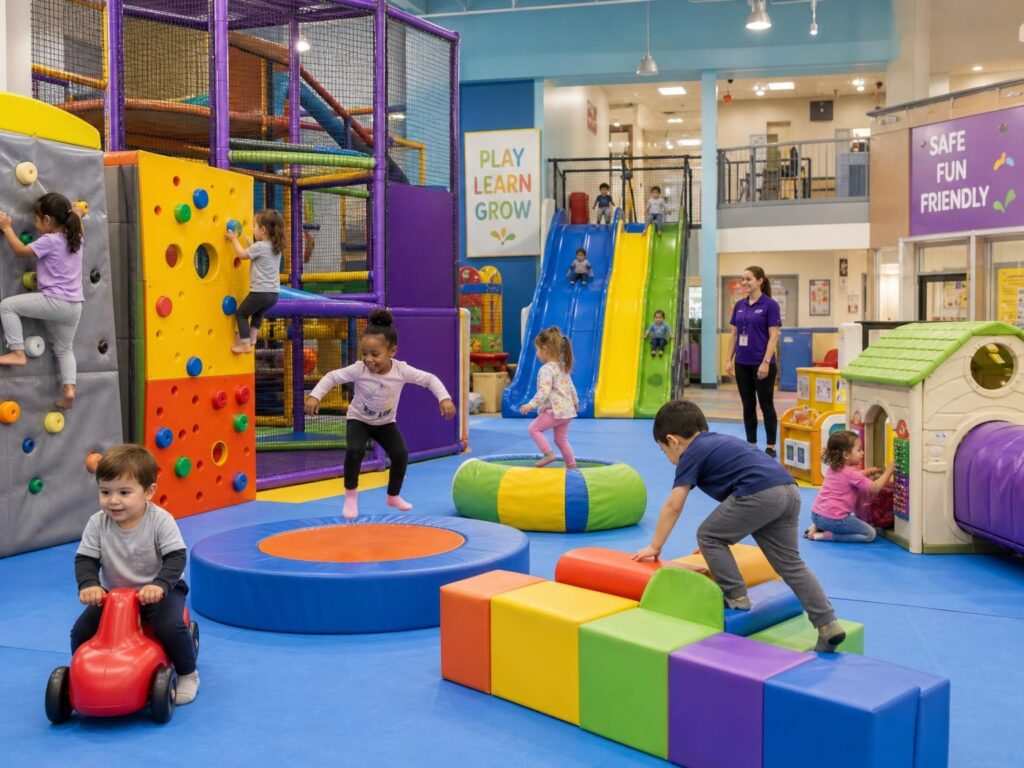
Size and flashy features matter less than whether the equipment actually suits the kids using it. Look for age-appropriate equipment, soft surfaces beneath climbing structures, and walkways that stay clear of clutter. Facilities that separate play zones for toddlers, preschoolers, and older children tend to have fewer collisions and less frustration all around. Visible supervision from staff, paired with clearly posted rules, is another good sign that a space is well-managed. Since conditions vary so much from one facility to the next, it’s worth confirming these details in person rather than assuming every play space measures up the same way.
Safety Checks Parents Should Make Before Visiting
Basic playground safety principles don’t disappear just because you’re indoors. Before letting a child loose on the equipment, it’s worth considering a few things:
- Equipment should match the child’s age and physical ability.
- Landing areas need impact-absorbing material, not hard flooring.
- Guardrails and barriers should be in place wherever fall protection is needed.
- Trip hazards, sharp edges, and loose clutter should be kept to a minimum.
Active supervision remains essential, especially for toddlers. A quick walk-through before letting a young child climb—checking the padding, the rail height, and where the exits are—can prevent a lot of avoidable injuries.
Quick Safety Check: Is the flooring padded? Are exits visible? Is staff present and paying attention? Are age groups separated? Is the equipment free of visible damage?
Indoor Play and Child Development Beyond Exercise
Physical activity is only part of the story. Indoor play also builds problem-solving skills through obstacle navigation and hands-on building activities, along with imaginative play during role-based games. Group settings give kids a chance to practice turn-taking, communication, and cooperation—skills that don’t always come naturally at first. Quiet or sensory-friendly corners can also benefit children who need a lower-stimulation break now and then, though of course not every child responds to these spaces the same way.
How to Choose the Right Indoor Play Experience for Your Child
Think about your child’s age, temperament, mobility, and sensory preferences before settling on a spot. A child who loves to climb might thrive on an active, multi-level structure, while a more reserved kid may do better in a quieter, less crowded corner. Visit length and crowd size matter too—an overstimulating environment can turn a fun outing into an overwhelming one fairly quickly. For toddlers especially, simpler layouts and close supervision usually work better than complex structures designed for older kids.
Practical Tips for a Better Visit
A little preparation goes a long way. Dress kids in comfortable clothing with non-slip socks or shoes, and don’t forget water for breaks. Going over the rules beforehand helps children know what’s expected, and simple boundaries—like staying within sight—make supervision much easier to manage. It also helps to watch for signs of fatigue or rough play, since these are often the first clue that it’s time for a pause.
Before You Leave Home: Comfortable clothing, non-slip socks, water bottle, a change of clothes, and a quick rules conversation with your child.
Where a Local Search Fits In
Many families compare indoor play spaces based on proximity, age fit, and safety features before deciding where to go. A local option can save time and make regular visits far more manageable, but convenience should never be a substitute for direct safety checks and genuine suitability for your child’s needs. Visiting in person, even briefly, is still the most reliable way to judge whether a space is actually a good fit for your family.
Questions Parents Should Ask Before Returning
After a visit, a short mental review can guide future decisions: Was the space easy to supervise? Did the equipment match your child’s age and ability? Was it clean and organized? Did your child seem engaged without becoming overwhelmed? Answering these honestly leads to more informed judgment rather than decisions made on impulse.
Post-Visit Reflection: Note what worked, what didn’t, and whether your child left happy or overstimulated.
Making Indoor Play Work for Families
The best indoor play spaces strike a balance between enjoyment and genuine developmental value. Prioritizing safety, age fit, supervision, and variety helps ensure that time spent playing indoors actually contributes to a child’s growth rather than just burning an afternoon. Instead of chasing the flashiest or most stimulating option available, aim for spaces that align with your child’s needs—that’s what turns indoor play into a dependable, low-stress part of family life rather than a gamble.