How to Make Handmade Yixing Teapot
Welcome to Sugar, Spice & Glitter! Please note, this post may contain affiliate links. For more details, see our Full Disclosure.
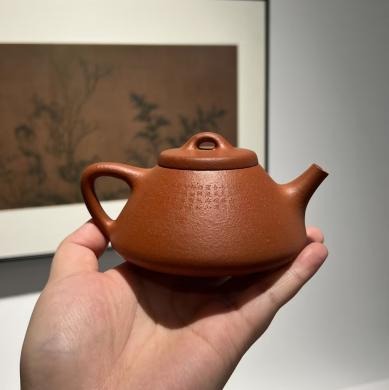
Yixing teapots are one of the best-known forms of Chinese tea ware, especially among people who enjoy traditional Chinese tea. Made from zisha clay from Yixing, these teapots are closely associated with the art of tea making and have been crafted in the region for centuries.
A finished handmade Yixing teapot may look simple: a clay body, a lid, a spout, and a handle. But behind this simple form is a detailed process that involves preparing the clay, shaping the body, fitting each individual part, refining the surface, and carefully controlling the drying and firing stages. Unlike many ceramic vessels that are formed on a pottery wheel, traditional Yixing teapots are generally shaped from prepared clay slabs and strips using paddles and hand tools. So, how does a piece of zisha clay become a handmade Yixing teapot?
1. Preparing the Zisha Clay
The first step is preparing the clay.
Zisha clay comes from mineral-rich ore found in the Yixing area. The raw material is hard when it is first mined, so it cannot be shaped directly. It needs to go through several stages before it becomes workable clay.
The ore is first weathered and allowed to break down naturally. It is then selected, crushed, and screened to remove unwanted material and achieve a suitable particle size. Water is added to the processed material, and the clay is kneaded and blended until it reaches an even consistency.
Traditionally, the prepared clay is then left to age, a process known as “chenfu”. During this period, moisture becomes more evenly distributed throughout the clay and the material becomes easier to work.
Different types of zisha clay have different colors, textures, and firing characteristics. Zini, for example, usually produces purple-brown tones, while zhuni can develop warmer red or orange-red colors after firing. These differences are part of what makes the appearance of a finished Yixing teapot closely connected to its clay.
- Making the Clay Slabs
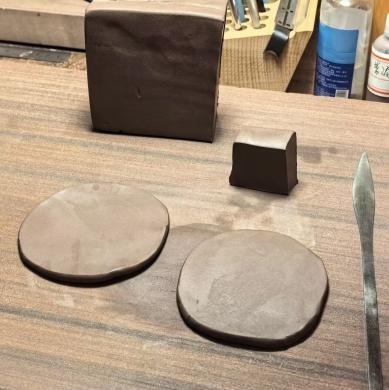
Once the clay is ready, the maker begins preparing it for shaping. A piece of clay is repeatedly beaten and compressed with a wooden tool called a “dazi”, gradually spreading it into a flat slab with a controlled thickness.
This is an important difference between traditional Yixing teapot making and wheel-thrown pottery. Instead of placing a lump of clay on a spinning wheel and pulling it upward, the maker works with clay slabs and strips. Repeated beating is not simply a way to flatten the clay. It helps make the material more even and workable, while the maker carefully judges its moisture and firmness throughout the process. If the clay is too wet, it can lose its shape; if it becomes too dry, it may crack during shaping.
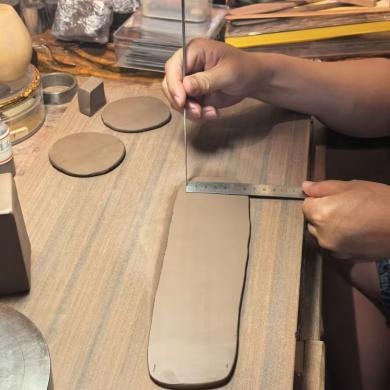
The finished slabs are then cut according to the design of the teapot. For a round teapot, a long rectangular slab can be joined to form a cylinder, which is later shaped with wooden paddles. For square, hexagonal, or other geometric forms, separate clay pieces are cut to the required angles and joined together.
Thickness also needs to be controlled carefully. Clay that is too thin can be difficult to shape and more prone to cracking during drying and firing, while clay that is too thick can make the finished teapot unnecessarily heavy and affect its proportions.
- Shaping the Teapot Body
This is where the basic form of the teapot starts to appear.
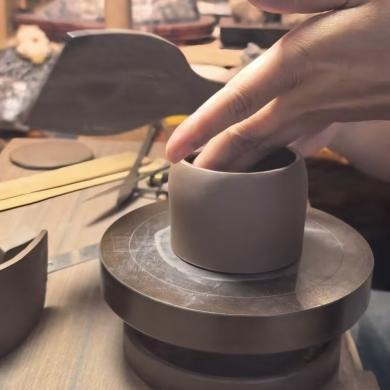
For a traditional round Yixing teapot, the clay cylinder is gradually shaped by hand. The maker supports the clay from the inside while using a wooden paddle or other tools on the outside. Repeated light blows compress and move the clay until the body reaches the intended curve. This traditional process is often referred to as “da shen tong”, or shaping the body cylinder.
The maker is constantly checking the proportions while working. The shoulder, belly, base, and opening need to relate to one another. A small change in one area can affect the appearance of the whole pot. This is also why making a handmade teapot is not simply a matter of following a fixed mold. The maker has to control the clay while the shape is developing.
- Making the Spout
The spout is made separately and then attached to the body.
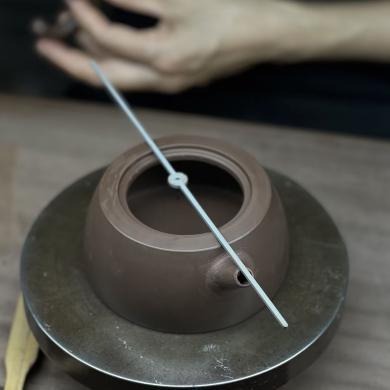
Its position, angle, and opening need to be carefully considered and adjusted to ensure a smooth, controlled flow of tea. The size and position of the opening also need to connect properly with the interior of the teapot.
Before attaching it, the maker trims the contact area so that the spout fits closely against the body. The joint is then pressed and refined until it becomes a natural part of the overall form.
A well-made spout is not only about appearance. Its opening, angle, and connection to the body all affect how the tea flows from the pot, so each detail needs to be carefully worked out during the making process.
- Shaping the Handle
The handle is another separate piece of clay.
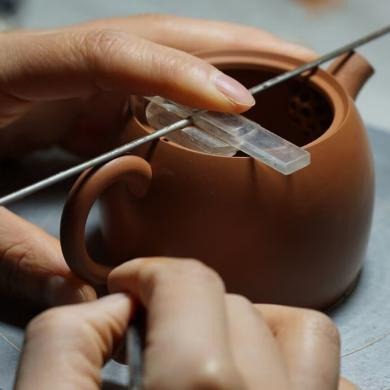
It may look like a simple curve, but its size, shape, and position need to match the body of the teapot. The maker shapes the handle by hand, then attaches it to the body and checks the balance between the handle, body, and spout. It also needs to be ergonomic, providing a comfortable grip while keeping the overall proportions of the teapot in harmony.
The handle must be strong enough to support the filled teapot. Once attached, the connection points are carefully refined so the handle flows naturally into the body instead of looking like a separate piece added afterward.
- Making and Fitting the Lid
The lid requires particularly careful work because it needs to fit closely with the opening of the teapot.
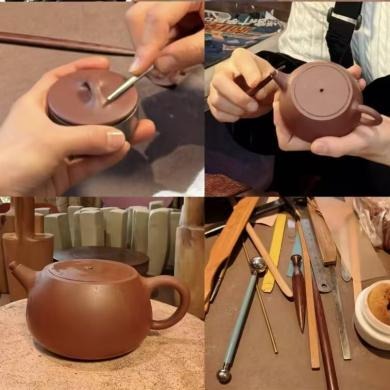
The maker forms the lid separately and gradually adjusts it to match the rim. The lid and the opening need to meet evenly, with a close fit that keeps the lid in place when the teapot is tilted for pouring. For a round teapot, the lid should also turn smoothly without catching or wobbling when it is rotated into position.
The knob on top is made and attached separately. Its size, shape, and position are considered in relation to the body of the teapot, while also allowing it to be easily grasped with the fingers. Once the lid and knob are fitted, the maker checks the proportions and refines the details to make sure the whole piece works as one.
- Creating the Filter Opening
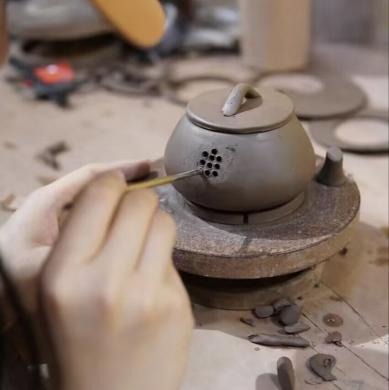
Inside the teapot, the area where tea leaves are separated from the spout is prepared before the piece is finished.
Depending on the design, the maker will create a clay filter with multiple openings or another type of built-in filtering structure. The holes need to be open and properly positioned so that water can flow while larger tea leaves remain inside the pot.
This part is easy to overlook because it cannot always be seen from the outside, but it has a direct effect on everyday use.
- Trimming and Refining the Surface
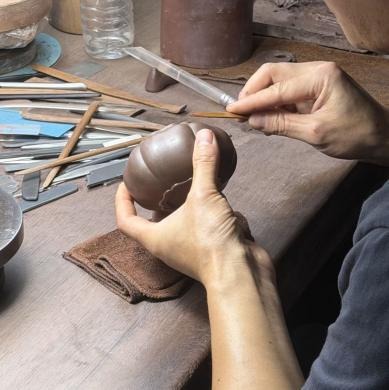
Once the main parts have been joined, the teapot enters the trimming and refining stage. At this point, the clay has become firmer but is still workable. The maker uses bamboo, wooden, and metal tools to remove excess clay, refine the curves, clean up the joints, and sharpen the details of the form.
The maker repeatedly works over the surface with specialized finishing tools, carefully pressing and smoothing the clay to refine its texture and shape. This process also helps compress the surface and brings out the natural characteristics of the clay.
The rim and the contact area between the lid and the body are also carefully refined at this stage. The maker checks the edges and removes any excess clay, sometimes using a fine abrasive to smooth the surfaces and achieve a close, even fit.
The maker also checks the overall lines of the teapot, including the curves of the body, the edges, and the transitions around the spout, handle, and lid. This stage turns the roughly shaped clay body into a more precise form before it is left to dry.
- Slow Drying Before Firing
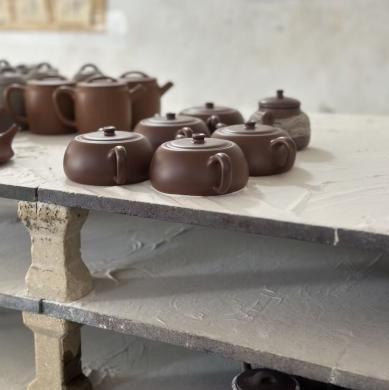
The finished teapot cannot go directly into the kiln.
It needs to dry gradually so that moisture leaves the clay without causing excessive stress. The body, lid, spout, and handle are all connected, so uneven drying can lead to cracks or distortion.
This stage may not look as interesting as shaping the clay, but it is important. A teapot that looks perfect when wet can still develop problems if it dries too quickly or unevenly.
- Firing and Final Inspection
After drying, the teapot is fired in a kiln. During firing, the clay undergoes major physical and chemical changes. It becomes hard and takes on its final color and texture. The firing temperature varies according to the type of clay and the intended result, so there is no single temperature that applies to every Yixing teapot.
The maker also needs to account for shrinkage during firing. A teapot can become noticeably smaller as the clay changes in the kiln, so this needs to be considered when preparing the original dimensions. This is one reason the lid fit and overall proportions require careful attention. A lid that fits correctly before firing still needs to come out properly after the clay has changed.
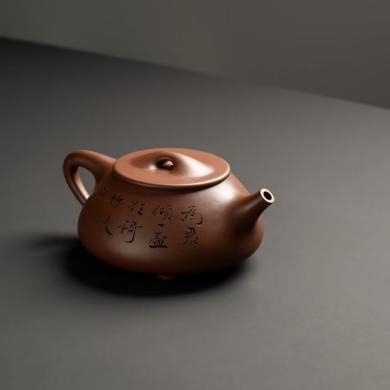
Once the teapot has cooled, the maker carries out a final inspection, checking the surface, rim, lid, spout, handle, and base. The lid should sit properly, the spout should be open, and the body should retain its intended shape.
What Makes a Handmade Yixing Teapot Different?
A handmade Yixing teapot stands out through the skill and attention involved in its making. Each step requires careful control, and small differences in the making process can affect the final shape, texture, and pouring behavior.
That is why two teapots made from similar clay can still have noticeable differences. A handmade Yixing teapot brings together the qualities of the clay, traditional craftsmanship, and practical design. Its value can be seen not only in its appearance, but also in how it performs when brewing and pouring tea.
For tea drinkers, details such as the clay texture, lid fit, spout, handle, proportions, and interior workmanship can tell you much more about a handmade Yixing teapot than its color or decorative details alone.